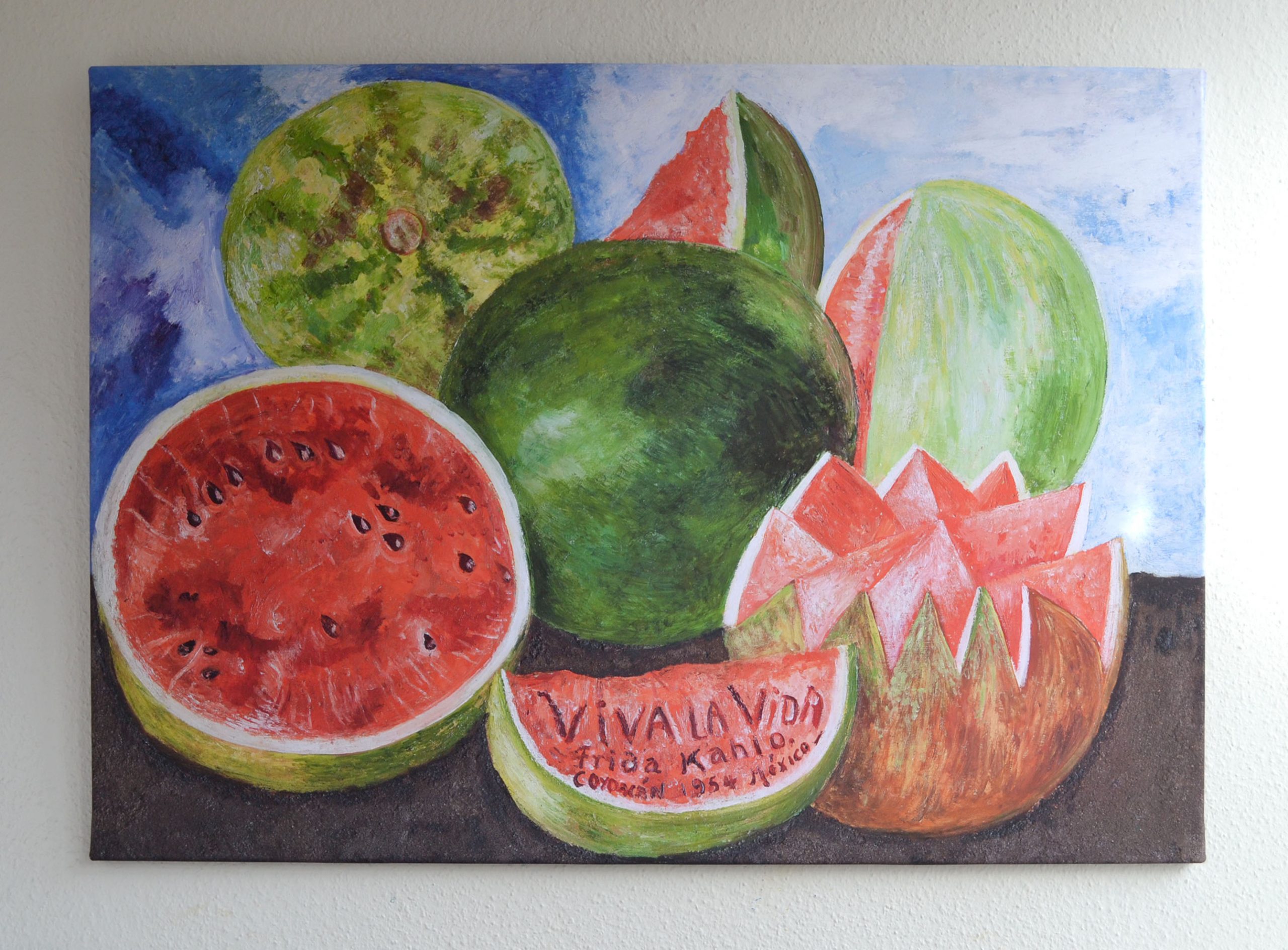
At first glance, it is a cheerful and carefree still life, but the picture becomes moving when you get to know its context. There it is, attention! the last painting of this famous Mexican artist.
A celebration of life in a woman tormented by suffering and disease, painted just before her death. Kahlo was famous for her self-portraits, often double, and yet for her last motive she chose watermelon, a fruit associated with the sun and childhood, full of sweetness and juice, actually frivolous.
The life of this extraordinary woman is full of scandals. She was the wife of Diego Rivera, whose works will also be featured in the Eyeopener, and the mistress of Trotsky. It was on her estate that a Russian communist was murdered.
Diego Rivera stated that the day Frida died was the most tragic day of his life and it was only then that he realized that the greatest part of his life was his wife and his love for her.


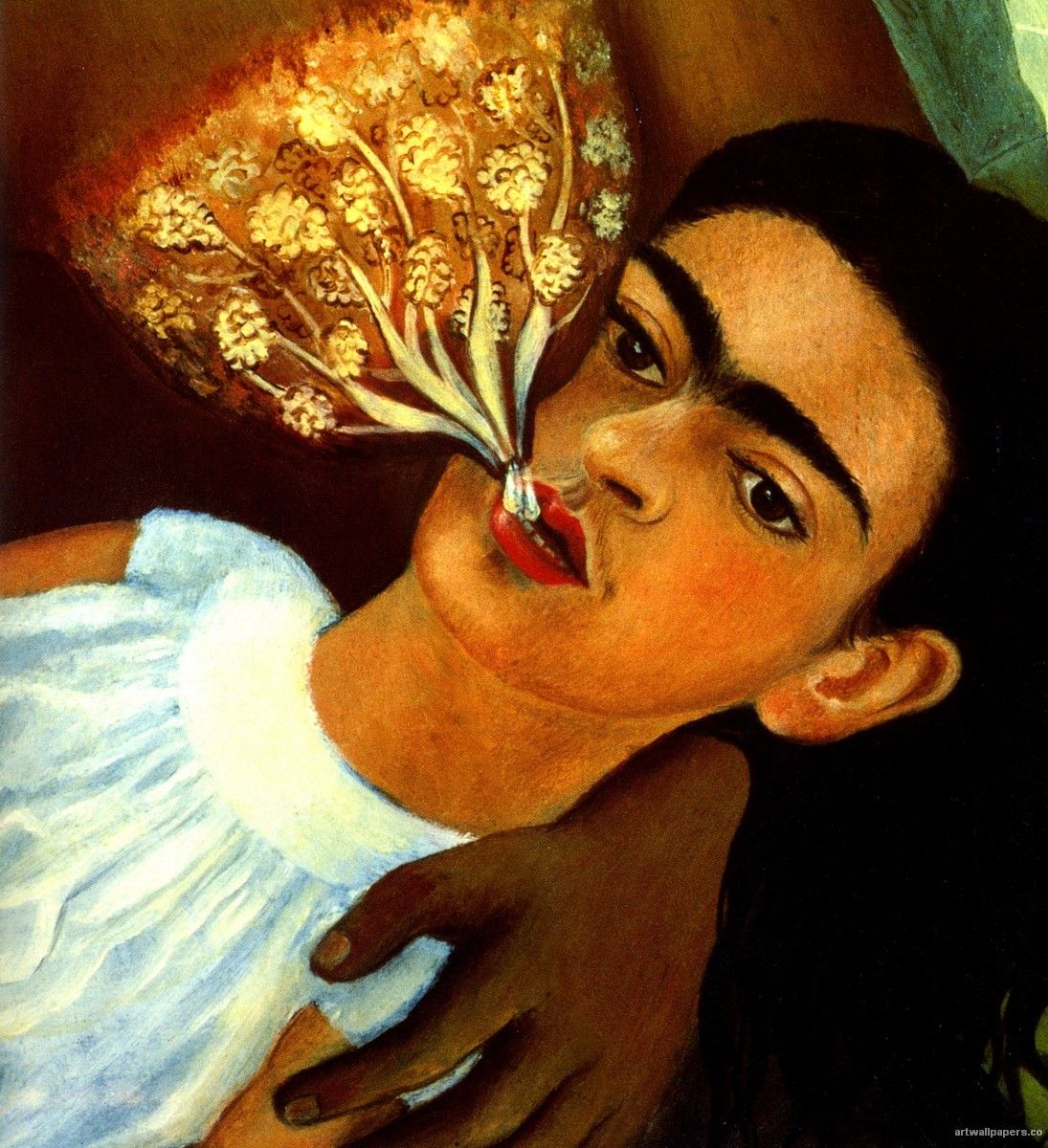

Frida Kahlo was born Magdalena Carmen Frieda Kahlo y Calderón on July 6, 1907 in Mexico. Frida Kahlo’s life began and ended in Coyoacán, in the house known as the “Blue House”. Kahlo claimed throughout her life that she was born on July 7, 1910, but the birth certificate states that she was born on July 6, 1907. The likely reason for this was Frida’s desire that her life, and especially its beginning, be equated with the birth of a new Mexico, which dates back to 1910 – the year of the Mexican revolution.
Kahlo’s art has many references to Mexican and Indian culture. For this reason, it is often described as naive or folk art, and often also as surreal. The characteristic themes touched upon by Kahlo in painting were suffering and physical pain. These references were directly related to her health problems from childhood, which additionally aggravated the consequences of a traffic accident in the teenage years.
Remaining a bit in the shadow of his wife Diego today, he was a genius painter, he left behind phenomenal frescoes, full of life, hidden associations of historical figures, matters, ideas, and above all, expressing the fate of an ordinary man, or as the communists called him: a man of work.

Its fresco in the Detroit Industry Museum, reminiscent of Michelangelo’s Sistine Chapel, is striking. 1932-33.


Subscribe Newsletter

 Polski (Polish)
  English GB (English)